 |
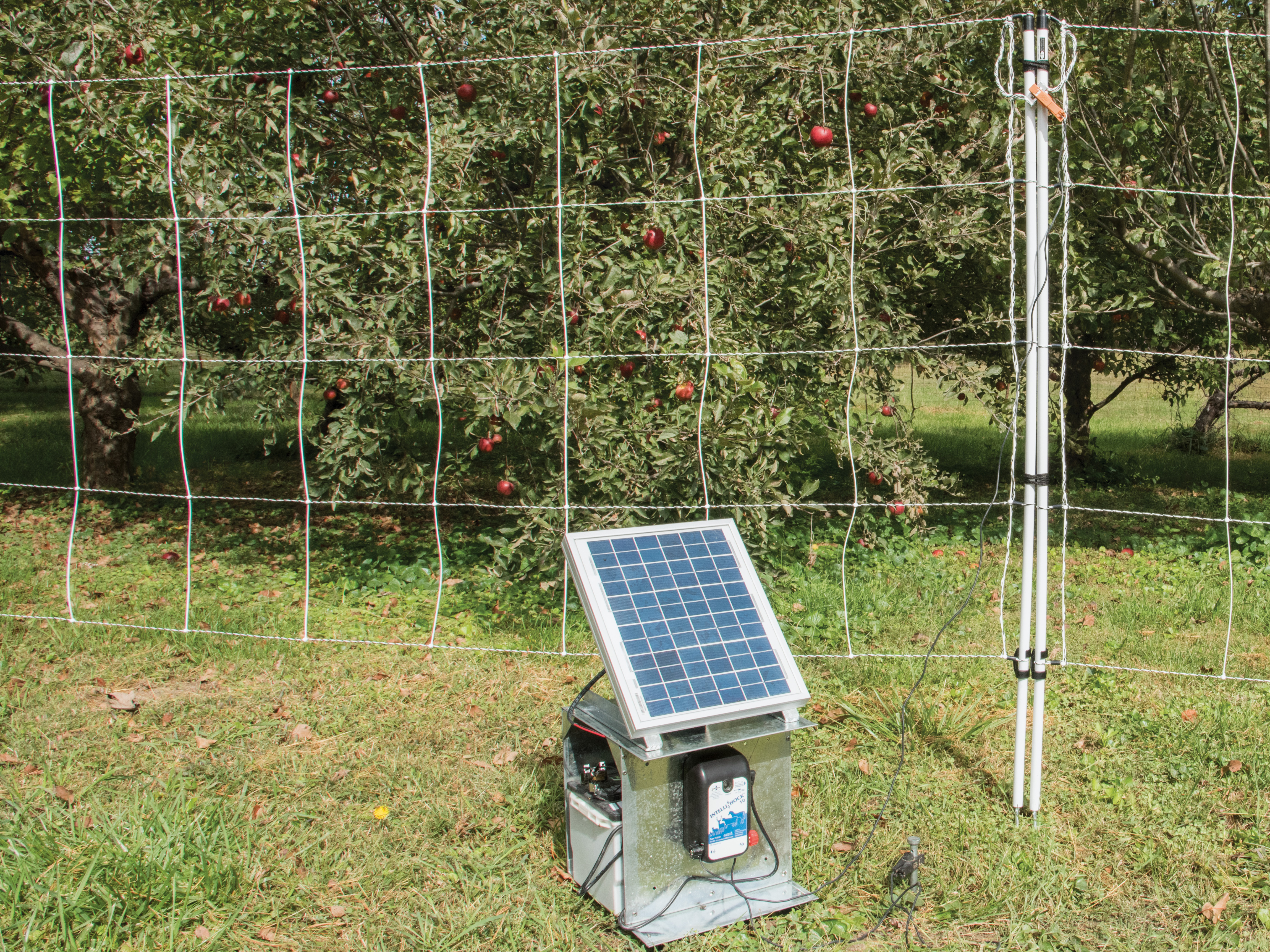
| When choosing a solar panel for your battery energizer; energizer draw (amps), available sunlight per day, and battery size all affect the output wattage needed. |
Determining the solar panel wattage needed to supply an energizer with power is relatively simple. To do so we use the Power Formula, P = EI. P is the wattage required, E is the battery's voltage, and I is the energizer's amperage draw.
Example, an energizer with a 100mA (.1 amp) per hour draw and a 12v battery would require 1.2 watts per hour, 28.8 watts or 2.4A throughout the day. The solar panel needs to supply the 2.4A to the battery in order for it to remain charged.
Now the fun part. It's not sunny 24 hrs a day. During the summer months, Premier receives about 5.5 hours of usable sunlight at our farm in SE Iowa (the panels are not tracking the sun). (Charts below indicate average hours of sunlight based on location and time of year.) This means the battery will be the sole power source for 18.5 hours "overnight". That's 1.85A. The panel will have to produce a days worth of energy in only 5.5 hours. That would be 2.4A/5.5 hours = 0.44A per hour. Recall that P=EI, so P = 12V x 0.44A = 5.3 Watts. A 5.3 W panel would provide enough current to run the energizer during the 5.5 hours or sunlight, plus enough current to replace what was used overnight.
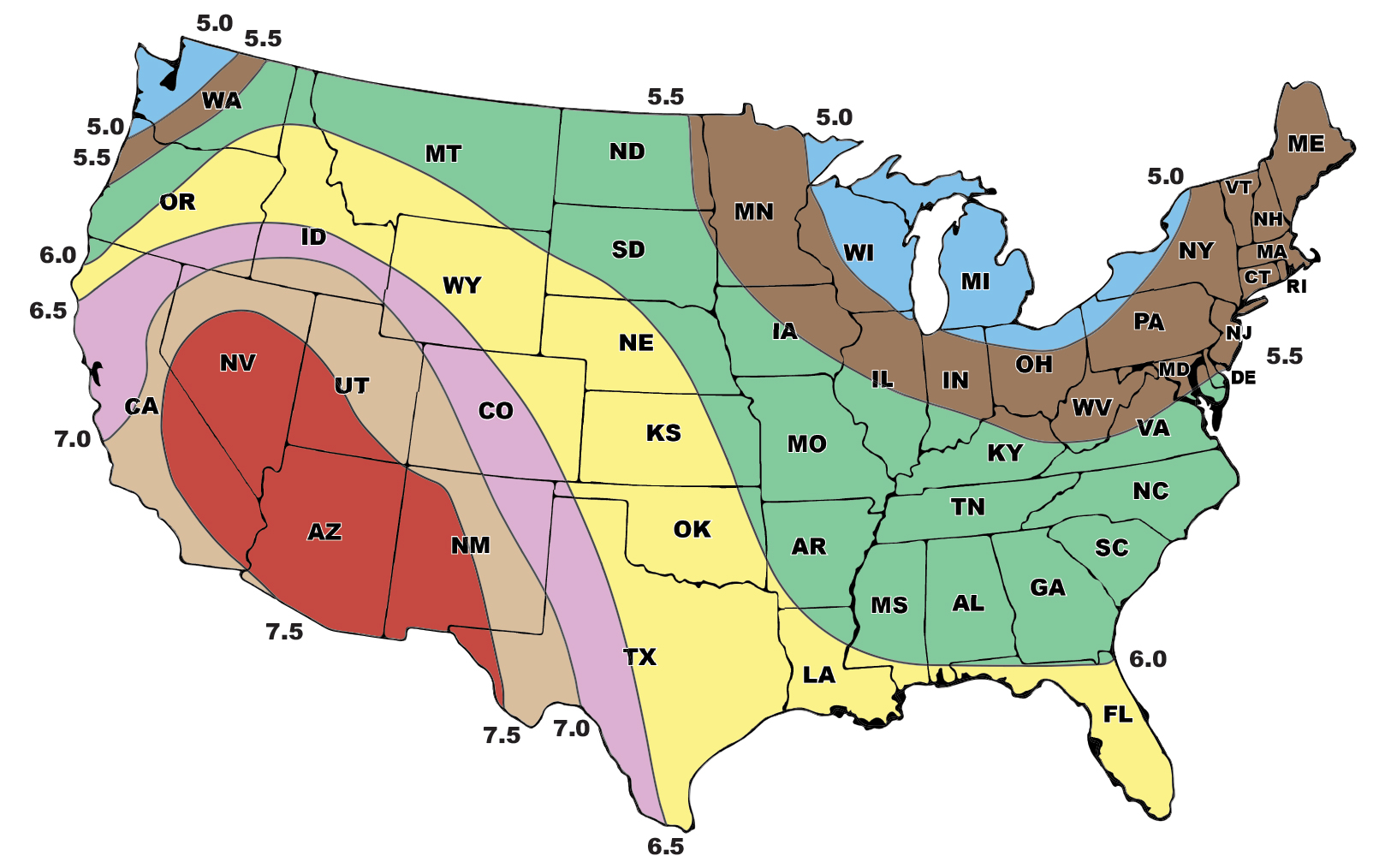 |
| Summer sunlight, hours available per average day. |
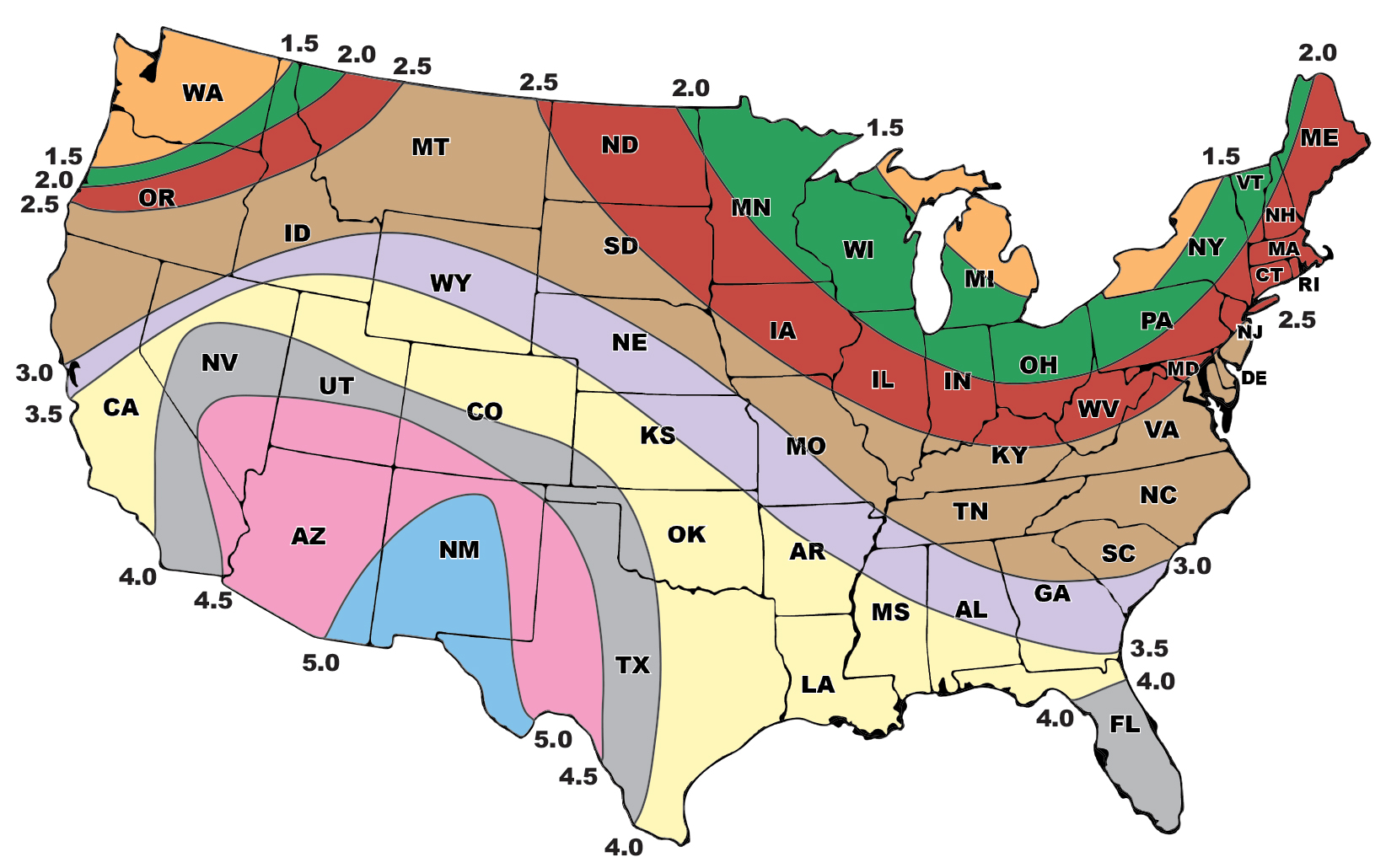 |
| Winter sunlight, hours available per average day. |
What about cloudy days where the panel is not supplying current? Assume Day one was sunny and the battery was topped off at sundown. Day two is cloudy. Sundown to sundown is 24 hrs, plus another 18.5 hours until Day 3 when the sun rises. That's 42.5 hours or 4.25A that needs to be recharged within 5.5 hours. Don't forget we also need to power the energizer until sundown on Day 3, so add .55A to that total, 4.8A. What's the wattage required? 4.8A / 5.5 Hours = 0.87A per hour. P = EI, 12V x .87A = 10.44 W.
The battery size determines the the number of days the energizer will run without sun light. The solar panel determines how many days it will take the battery to recover to full charge after a cloudy day(s).
For those wondering, what size energizer uses 100mA per hour? Most units in the 1 joule output range consume that much power.
If an out-of-box solar energizer kit does not fit your needs, a set-up to fit your situation can be easily designed using the formula above. Happy fencing!

